What is a DEX in crypto? A power trader’s guide to decentralized exchanges

In this article you will learn how decentralized exchanges (DEXes) work, where they beat centralized exchanges (CEXes), and what can cost you money before you swap.
Since 2019, 1inch has routed swaps across roughly 100 DEXes on 13 chains. That experience shows one thing clearly: using a DEX is not just about “decentralization.” It is about execution. Price, liquidity, slippage, MEV, gas and routing all shape the final result.
What is a DEX?
A decentralized exchange, or DEX, is a non-custodial crypto trading venue where swaps are executed by smart contracts on-chain between crypto traders, not by a centralized company holding your funds such as Binance or Coinbase.
On the contrary, in a centralized exchange (CEX), you deposit assets into an account and trade inside that platform’s internal system. On a DEX, you connect a wallet, choose a trade and sign a transaction. The trade settles on-chain.
Unlike a centralized exchange, a DEX is entirely non-custodial. This changes how your trades settle:
- Reduced Custody Risk: The exchange engine never holds or locks your funds.
- Wallet-to-Wallet Trading: Your assets stay in your personal wallet until you sign to approve a transaction.
- Automated Execution: An immutable smart contract handles the swap instantly based on predefined protocol rules.
On a centralized exchange, you rely on the platform to custody assets, match orders, maintain balances and process withdrawals. On a DEX, the blockchain records the trade and the smart contract handles execution.
A DEX is also not simply “an app that lets you trade crypto.” The interface is only the front end. The important part is the smart contract behind it.
Three quick clarifications help avoid confusion:
- A DEX is not an app you give your private keys to.
- A DEX is not the same as a centralized exchange with crypto branding.
- A DEX does not need a centralized order-matching server.
Is Coinbase a decentralized exchange? No. Coinbase is a centralized exchange. Coinbase Wallet is a separate self-custody wallet, but Coinbase itself is not a DEX.
Is XRP a decentralized exchange? No. XRP is a crypto asset. The XRP Ledger has decentralized exchange functionality, but XRP itself is not a DEX.
For a trader moving off a CEX, the main shift is control. You gain more direct access to on-chain markets. You also take on more responsibility for execution, security and transaction settings.
How DEXes actually work
A DEX uses smart contracts to execute trades.
A smart contract is code deployed on a blockchain. It defines how assets can move, who can interact with the protocol and what conditions must be met before a trade is completed.
When you swap on a DEX, the process usually looks like this:
- You connect a self-custody wallet.
- You choose the token you want to sell.
- You choose the token you want to buy.
- You review the quote, fees and slippage settings.
- You sign the transaction.
- The smart contract executes the trade on-chain.
That removes the CEX account layer. There is no exchange balance maintained in a private database. There is no withdrawal request. There is no centralized matching engine controlling settlement.
But DEXes still need liquidity.
That liquidity usually comes from one of two models: AMMs or orderbooks.
Automated Market Makers (AMM) DEXes
Most major spot DEXes use automated market makers, or AMMs.
An AMM does not rely on buyers and sellers placing matching orders. Instead, it uses liquidity pools. A liquidity pool is a smart contract that holds two or more assets and lets traders swap against those reserves.
Liquidity providers, or LPs, deposit assets into the pool. In return, they earn a share of trading fees. Academic work on AMMs describes this model as decentralized trading through liquidity pools where LPs supply assets and earn fees from trades.
The simplest AMM design uses a constant product formula:
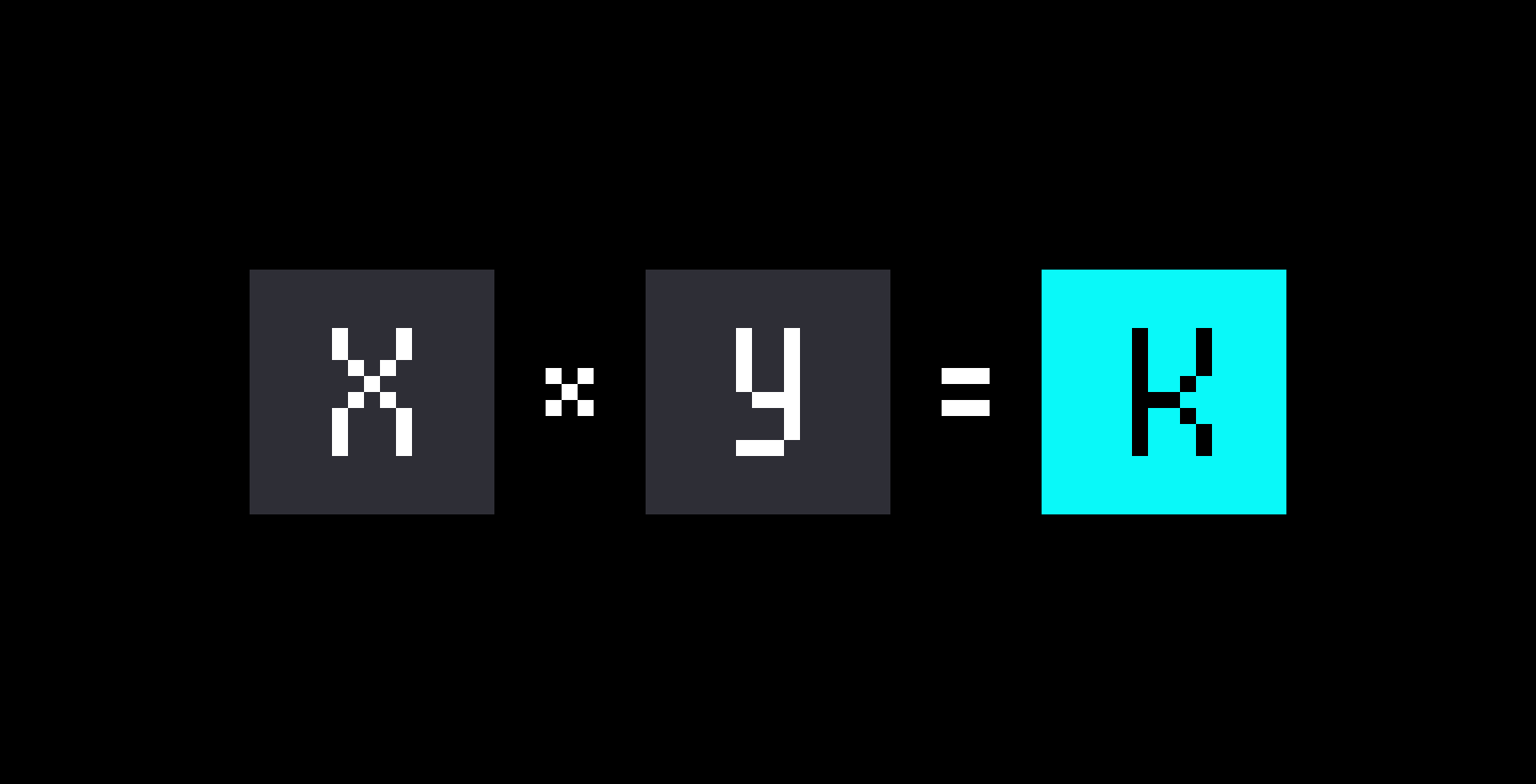
Here is the basic idea:
ETH reserve * USDC reserve = constant
Before trade:
100 ETH * 300,000 USDC = 30,000,000
If you buy ETH from the pool:
ETH reserve falls
USDC reserve rises
The price of ETH goes up inside that pool
That is why large trades move the price. The pool must keep the equation balanced. The more you take from one side, the more expensive each next unit becomes.
Orderbook DEXes
Some DEXes use orderbooks.
An orderbook has bids and asks. Buyers place bids. Sellers place asks. The trade happens when prices match.
This model is closer to what you see on a CEX. It can work well for markets with deep liquidity and active market makers, especially derivatives and perpetuals.
The tradeoff is complexity. A fully on-chain orderbook can be expensive and slow on some networks because every order update may require blockchain interaction. Many orderbook DEXes therefore use hybrid designs, with some parts off-chain and settlement on-chain.
Liquidity pools in 90 seconds
Liquidity is the reason a DEX can execute your swap.
If you want to swap ETH for USDC, the protocol needs access to ETH and USDC liquidity. In an AMM, that liquidity sits in pools. In an orderbook, liquidity sits in open bids and asks.
For LPs, the incentive is fees. Traders pay swap fees. LPs receive a share of those fees based on their pool contribution.
For traders, the benefit is access. You do not need a centralized market maker to quote you a price. The protocol can quote a price based on available liquidity.
But liquidity is fragmented. One pool may offer a better rate than another. One chain may have better depth for a pair than another. One DEX may be cheaper for a small swap, while another may be better for a larger order.
How Liquidity Pools Work
A decentralized exchange can only execute a trade if it has an immediate supply of tokens available. For example, to swap ETH for USDC, the underlying protocol needs direct access to both ETH and USDC liquidity.
In an Automated Market Maker (AMM), these tokens are held inside smart contracts called liquidity pools. On an order book DEX, that supply exists instead as open buy and sell offers.
Liquidity providers (LP) fund these digital reserves by depositing their own crypto assets into the smart contract. In return for keeping the market funded, these providers earn a direct share of the trading fees generated by the platform. For traders, liquidity pools provide instant access to swaps without relying on a centralized broker; the protocol calculates the exchange rate mathematically based on the remaining token balance.
Because anyone can deploy a new pool across different blockchains, crypto liquidity is heavily scattered throughout the market. A single DEX might offer an excellent exchange rate for a small swap, while a completely different protocol has the deep reserves necessary to handle a much larger order safely. DEX aggregators eliminate the friction of scattered liquidity by automatically scanning multiple decentralized exchanges at once to route a trade through the most efficient swap.
Types of DEXes
DEXes are not all the same. Different designs solve different execution problems.
AMM-based DEXes
AMM DEXes use liquidity pools and pricing curves.
Examples include Curve, PancakeSwap, SushiSwap and Uniswap.
Constant-product AMMs are the classic model. They work well for general token pairs. The formula keeps pool reserves balanced, but large trades can create price impact.
Concentrated-liquidity AMMs let LPs provide liquidity inside chosen price ranges. Uniswap v3 popularized this design, and research on Uniswap v3 describes how LPs can allocate liquidity to specific price intervals instead of the full possible price range.
Stableswap curves are designed for assets that should trade near the same value, such as stablecoin pairs. Curve is the best-known example of this category.
Orderbook DEXes
Orderbook DEXes use bids and asks.
Examples include dYdX and OpenBook.
Orderbooks can work better for advanced trading and derivatives markets. They can also support limit orders in a way that feels familiar to CEX traders.
The tradeoff is that orderbooks require active liquidity and fast updates. That can be harder to run fully on-chain.
Hybrid DEX models
Hybrid DEX designs combine features from multiple models.
Curve’s StableSwap design adjusts the AMM curve for similar assets. Uniswap v3 concentrates liquidity into price ranges. Other protocols combine off-chain order management with on-chain settlement.
The goal is usually the same: better capital efficiency and better execution.
DEX aggregators
A DEX aggregator searches across multiple DEXes to find a better route for your swap.
Examples include 1inch, CoW Swap, Matcha, Odos and ParaSwap.
Aggregators exist because liquidity is fragmented. No single DEX has the best price for every token, amount and chain.
A $100 swap and a $100,000 swap can need very different routes. A small trade may go through one pool. A larger trade may need to be split across several DEXes to reduce price impact.
1inch was built to solve this problem. The goal is not to make you manually check every venue. The goal is to make the route compete for you.
Cross-chain swap protocols
Cross-chain swap protocols move value between chains.
This is a separate but related category. A cross-chain swap can involve liquidity, messaging, bridges, solvers or intent-based execution.
For traders, the goal is simple: move from one asset on one chain to another asset on another chain without doing several manual steps.
Power trader concepts: the stuff that costs you money
A DEX trade can look simple in the interface. The outcome depends on details that may not be obvious at first glance.
These are the concepts that matter most.
What is slippage?
Slippage is the difference between the expected price of a trade and the final executed price.
On a DEX, slippage happens because the market can move before your transaction confirms. It can also happen because your trade changes the pool price while it executes.
Slippage tolerance tells the protocol how much price movement you are willing to accept.
Set it too low, and your transaction may fail. Set it too high, and you may leave yourself exposed to worse execution or sandwich attacks.
As a rough practical range:
- Blue-chip pairs often work around 0.1% to 0.5%.
- Less liquid tokens may need wider tolerance.
- Very low-cap tokens can require 5% to 10% or more.
That does not mean high tolerance is good. It means thin liquidity is expensive.
Price impact vs slippage
Price impact is caused by your own trade moving the pool price.
Slippage is the difference between the quote and final execution.
They are related, but they are not the same.
A large trade can have high price impact even if it executes immediately. A small trade can suffer slippage if the market moves before confirmation.
MEV and sandwich attacks
MEV, or maximal extractable value, is value that can be captured by ordering, inserting or reordering blockchain transactions.
A sandwich attack is one common MEV strategy.
It usually works like this:
- A bot sees your pending swap.
- The bot buys before you.
- Your trade executes at a worse price.
- The bot sells after you.
The bot profits from your price movement.
Research on sandwich attacks shows the core tradeoff clearly: too little slippage tolerance can cause failed transactions, while too much tolerance can give predatory bots more room to extract value.
Some aggregators and intent-based systems try to reduce this risk through private routing, solver competition or execution designs that avoid exposing the full trade to the public mempool.
1inch intent-based swaps are designed around this problem. You sign an intent, and professional resolvers compete to execute it. That can help reduce MEV exposure and remove the need for you to manage every execution detail manually.
Gas fees
Gas is the cost of using a blockchain.
On a DEX, gas matters because every major action happens on-chain. Approvals, swaps, liquidity changes and some failed transactions can all cost gas.
Gas can change quickly. A trade that looks attractive at one moment can become less attractive if network fees spike.
Failed transactions
Failed transactions are part of DEX trading.
Common causes include:
- Slippage tolerance was too low.
- Gas settings were too low.
- The pool price changed before confirmation.
- A token has transfer restrictions.
- The route became invalid.
- MEV or reordering affected execution.
A failed transaction does not usually mean your entire trade amount is lost. But the gas spent on the failed transaction is usually not returned.
Before retrying, check what failed. Raising slippage blindly can make the next trade worse.
How to use a DEX
The easiest way to understand DEX trading is to walk through the flow.
Here is a practical example using the 1inch app as the interface.
1. Get a self-custody wallet
You need a wallet that lets you connect to DeFi apps.
Examples include browser wallets, mobile wallets and hardware wallets. 1inch Wallet is one option for mobile self-custody.
Your wallet holds your assets and signs transactions. The DEX does not take custody of your funds.
2. Fund your wallet
You need the asset you want to trade.
You also need the chain’s gas token. On Ethereum, that is ETH. On BNB Chain, that is BNB. On Polygon, that is POL.
You can fund your wallet by:
- withdrawing from a CEX,
- using an onramp,
- bridging from another chain,
- receiving assets from another wallet.
3. Connect to a DEX or aggregator
Go to the trading interface and connect your wallet.
An aggregator can search across many DEXes at once. That saves you from checking individual pools manually.
4. Set slippage and review the route
Choose the token you want to sell and the token you want to buy.
Then review:
- expected receive amount,
- route,
- price impact,
- network fee,
- slippage tolerance,
- token addresses.
Do not skip this step. Execution quality often lives in the details.
5. Sign and confirm
If it is your first time trading a token, you may need to approve it.
After approval, sign the swap.
Your wallet will show transaction details. Review them before confirming.
For most traders, an aggregator helps with steps 3 and 4 by checking many DEXes and routes at once. That becomes more important as trade size increases.
Risks and limitations
DEXes reduce some risks. But they also introduce others.
A good trader understands both.
Smart contract risk
DEXes run on smart contracts. Smart contracts can have bugs.
Audits reduce risk, but they do not make risk disappear. Even audited protocols have been exploited.
1inch has a long audit history and security-first culture, but no DeFi interface should be treated as risk-free.
Self-custody risk
Self-custody gives you control. It also gives you responsibility.
If you lose your seed phrase, you may lose access to your funds. If you sign a malicious transaction, there may be no support team that can reverse it.
Hardware wallets can reduce key-management risk. Good wallet hygiene matters.
Fake tokens and scams
DEXes are permissionless. That is a strength and a risk.
Anyone can deploy a token. Anyone can create a pool. A token name or ticker can be copied.
Before trading, verify the contract address from a trusted source such as the project’s official site, CoinGecko or CoinMarketCap. Do not rely on search results inside a DEX interface alone.
Lower fiat liquidity
A DEX does not usually let you cash out directly to a bank account.
You can swap into stablecoins on-chain. To move into fiat, you normally need a CEX, card provider, bank-connected onramp or offramp.
Regulatory and tax complexity
DEX trades can still be taxable.
A DEX may not send you the same type of tax form as a CEX. That does not remove your obligation to track trades and report taxable events where required. In the US, tax reporting rules for digital assets continue to evolve, and reporting obligations can differ between custodial and decentralized platforms.
Keep your own records.
DEX crypto FAQ
Is Coinbase a decentralized exchange?
No. Coinbase is a centralized exchange.
Coinbase Wallet is a separate self-custody wallet. A wallet can connect to DeFi, but that does not make the Coinbase exchange a DEX.
What is the best decentralized crypto exchange?
The right DEX depends on what you are trading.
An AMM may be better for a simple token swap. An orderbook DEX may be better for derivatives. An aggregator may be better when liquidity is split across many venues.
Do decentralized exchanges report to the IRS?
A DEX may not report in the same way as a centralized broker.
That does not mean DEX trades are tax-free. You are still responsible for reporting taxable transactions where required.
Are DEXes safe?
DEXes reduce custodial risk because you trade from your own wallet.
DEXes still carry smart contract risk, token risk, phishing risk and execution risk.
Can I cash out from a DEX?
Usually not directly to fiat.
A common path is to swap into a stablecoin, then use a CEX or offramp provider to move into a bank account.
What is the difference between a DEX and a DEX aggregator?
A DEX is a trading venue.
A DEX aggregator searches across multiple venues and routes your trade to improve execution.
Do DEXes charge fees?
Yes.
You may pay:
- swap fees to liquidity providers,
- gas fees to the blockchain,
- price impact from the trade itself,
- execution costs embedded in some routes.
Can I use a DEX with a hardware wallet?
Yes.
A hardware wallet can connect through supported wallet software and sign DEX transactions. This can help protect private keys, but you still need to review every transaction before signing.
The next step after understanding DEXes
A DEX gives you direct access to on-chain liquidity.
That is powerful. It also means execution matters more. A trade can be affected by fragmented liquidity, slippage, price impact, gas and MEV.
This is why aggregators became a core part of DeFi trading. Once liquidity is spread across many venues, the question is no longer only “which DEX should I use?”
The better question is:
Where is the best route for this trade right now?
1inch helps answer that question by giving you access to major DEX liquidity from one interface.
Trade across major DEXes from one place on 1inch.com.
Join us


